

India’s marketing calendar is shaped by regional festivals, shopping seasons, school holidays, tourism cycles, product launches and major cultural occasions. For brands operating across multiple states, the challenge is not simply to advertise more—it is to reach the right markets at the right time with a message that resonates with local audiences.
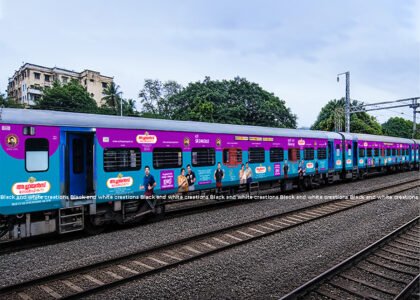
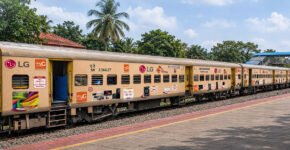
Railway advertising campaigns in India can play a valuable role in this strategy. Through train exterior branding, interior train advertising and railway station media, brands can establish a physical presence across selected travel corridors and passenger environments.
However, seasonal advertising requires more than placing a creative on a train. Successful planning involves selecting the right campaign period, understanding the target market, preparing localised creative, allowing sufficient execution time and measuring performance against clear business objectives.
This guide explains how businesses can integrate railway advertising into festival marketing and seasonal campaigns.
Consumer interest and purchasing behaviour can change throughout the year. Festival periods may create opportunities for jewellery, apparel, electronics, gifts and consumer products. Holiday seasons can be relevant to tourism and hospitality brands, while admission periods may matter to educational institutions.
These opportunities differ by state, city, category and audience. A campaign that is relevant in one market may not have the same impact elsewhere.
Seasonal media planning helps businesses answer five important questions:
Railway advertising becomes more useful when these decisions are made before the campaign is booked and executed.
A festival is a marketing opportunity, but it should not automatically become the reason for every campaign.
Start by identifying what the business wants to achieve.
A brand entering a new city or state may need to establish familiarity before customers begin comparing products. Train exterior branding can help create visibility across the locations served by a selected route.
A business launching a new product can coordinate railway advertising with digital campaigns, retail promotions and public relations. Consistent visual identity across channels helps customers recognise the campaign.
A company expanding distribution or retail operations can prioritise routes and station locations that align with its target markets. Media selection should reflect actual business priorities rather than the number of available advertising locations.
Some products have demand throughout the year, with seasonal peaks layered on top. A longer-term railway advertising presence may support brand familiarity, while digital advertising and retail promotions can provide more immediate calls to action.
The key is to define the intended outcome before selecting the medium.
India does not have a single uniform festival calendar. Cultural occasions, shopping patterns and local demand vary across regions.
A campaign plan should account for the relevance of an occasion to the product and the locations being targeted.
Onam and Kerala’s festive shopping season
Jewellery, apparel, home products, supermarkets and consumer brands may consider campaigns aligned with Onam-related shopping activity. Creative should reflect the brand’s audience and offer rather than rely on generic festival imagery.
Pongal and Tamil Nadu
Brands targeting Tamil Nadu can plan locally relevant campaigns around Pongal where the occasion fits their category. Language, visual references and product messaging should be appropriate for the intended audience.
Diwali and the year-end shopping season
Businesses selling electronics, gifts, fashion, home products and consumer goods may use seasonal campaigns to reinforce brand awareness before and during the relevant buying period.
Summer holidays and tourism periods
Tourism boards, resorts, hotels, attractions and travel-related businesses can assess whether selected railway routes align with their target travellers and destination markets.
School admissions and education campaigns
Educational institutions can plan awareness campaigns around their actual enquiry and admission timelines. The campaign should be designed to reach relevant families and students, rather than simply coincide with a broad seasonal event.
These are planning examples, not a guarantee of campaign performance. The best occasion depends on the brand’s category, geographic footprint, budget and customer behaviour.
One of the most important decisions in train branding is route selection.
A train’s geographic coverage is only one consideration. The route should make commercial sense for the brand.
Before finalising a campaign, assess:
For a regional campaign, a carefully selected corridor may be more useful than a broader plan that does not align with the company’s sales footprint.
Black & White Creations provides railway advertising options across train exterior branding, interior train branding and selected railway station formats. Actual availability, route details and campaign conditions should be confirmed before booking.
Different advertising formats serve different roles. The right mix depends on whether the campaign aims to build awareness, reinforce a message or direct people towards an action.
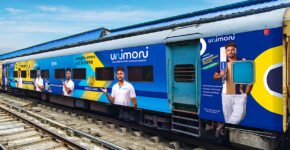
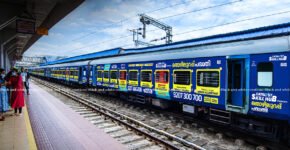
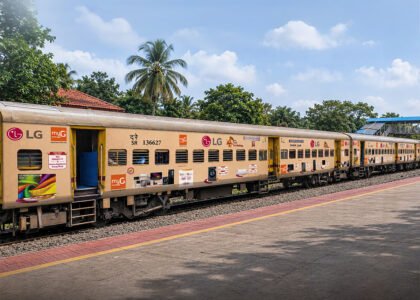
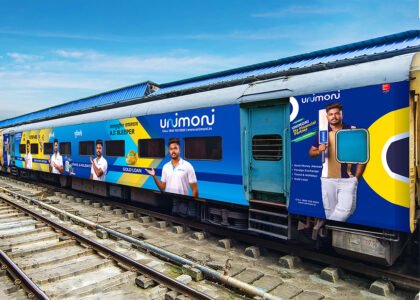
Exterior train branding places campaign visuals on the outside of railway coaches, subject to applicable approvals. It can be considered for brands seeking visibility across multiple locations along a train’s operating route.
For a seasonal campaign, creative should feature a recognisable brand identity, one clear message and a relevant visual. Avoid crowding the design with too many offers, product details or competing calls to action.
Interior branding places campaign messages within passenger coaches. It can support product awareness and message reinforcement during a journey.
For seasonal promotions, consider concise copy, readable typography and a clear hierarchy between the brand, offer and action. Any QR code or URL should be tested for legibility and usability.
Station advertising can provide visibility in selected passenger environments. Depending on the available format, options may include boards and other authorised media.
This can be useful when a brand wants to prioritise particular markets or combine train advertising with selected station placements.
Railway advertising can also be coordinated with digital advertising, social media, retail promotions and other approved media.
For example, a brand might use railway advertising to establish awareness, digital campaigns to communicate a limited-period offer, and a landing page to capture enquiries. Each channel should have a defined role.
A campaign should be recognisable at a glance. Seasonal relevance is helpful, but the brand must remain the main point of recognition.
Use the following principles:
A regional campaign does not always require an entirely different creative for every location. A consistent brand platform with carefully adapted language, offer details or supporting visuals can provide both recognition and relevance.
Seasonal campaigns operate within fixed dates. Delays in creative development, approvals or installation can reduce the useful campaign period.
Work backwards from the date on which the advertising needs to be live.
Stage 1: Define the objective and markets
Agree on the audience, target regions, campaign budget, key message and success measures.
Stage 2: Check inventory and availability
Discuss suitable train routes, interior or exterior formats, station media options, campaign duration and commercial terms with the advertising partner.
Stage 3: Develop and review creative
Prepare artwork to the relevant specifications. Review branding, language, product claims, offer validity and contact details.
Stage 4: Obtain the necessary approvals
Confirm the applicable railway requirements and approval process. Do not assume that booking media automatically authorises every creative execution.
Stage 5: Confirm execution and launch
Agree on the schedule, installation requirements, documentation and campaign start date with the relevant parties.
Stage 6: Monitor and evaluate
Record campaign start and end dates, retain available execution evidence and review performance against the objectives.
The exact lead time depends on the media format, inventory, approvals and operational requirements. Obtain a confirmed schedule rather than relying on a generic number of days.
Physical advertising can establish visibility, while digital channels can help interested customers find more information or take action.
A coordinated campaign might include:
Use campaign-specific URLs, QR codes or enquiry identifiers where practical. Keep the landing page mobile-friendly and make the next step obvious.
For measurement, distinguish between activity directly attributable to the campaign and activity that merely occurs during the same period. A rise in enquiries during a festival does not, by itself, prove that railway advertising caused the increase.
Railway advertising should be evaluated using realistic and transparent measures.
For an awareness campaign, useful indicators may include the locations covered, duration of exposure opportunities, execution compliance and changes in brand awareness where research is available.
For campaigns intended to generate enquiries or sales, consider:
Do not treat potential audience reach as equivalent to confirmed unique viewers, leads or conversions. Reach estimates and actual response data measure different things.
A useful campaign report should state what was executed, what was measured, what the data can reasonably establish and what should change next time.
Railway advertising is subject to applicable policies and approval requirements. The Ministry of Railways stated in a Rajya Sabha reply published on 28 March 2026 that advertising plans for display inside and outside trains require prior approval through the relevant railway authority, and that advertisements must comply with applicable laws and restrictions.
The same statement identifies prohibited categories and content, including advertisements for alcoholic drinks and tobacco products, among other restrictions. Requirements should be checked against the latest applicable rules for the specific media format and location.
Before launch, confirm:
Official guidance should be checked for the specific campaign; do not rely on an old approval or assume that all railway formats have identical conditions.
Before confirming a seasonal railway advertising campaign, make sure the team can answer the following:
Is the campaign objective clearly defined?
Are the target states, cities and customer groups identified?
Does the timing align with the relevant buying period?
Have suitable routes and advertising formats been evaluated?
Is the creative legible, localised and brand-led?
Are the offer, contact details and landing page correct?
Are approvals, availability and execution dates confirmed?
Are campaign-specific tracking methods ready?
Are sales and marketing teams prepared to handle enquiries?
Is there a plan to review results and improve the next campaign?
Festival and seasonal marketing can create valuable opportunities for brands, but timing alone is not a strategy. Results depend on the relevance of the offer, market selection, creative quality, execution, audience fit and the wider marketing mix.
Railway advertising campaigns in India can help businesses build visibility across selected travel corridors and passenger environments. When coordinated with regional marketing, digital channels and clear measurement, they can become part of a more structured brand-building programme.
Black & White Creations helps businesses explore railway advertising options, including train exterior branding, interior train branding and selected railway station media. The right campaign begins with your target market, business objective and preferred timeline—not simply the choice of an advertising surface.
Planning a seasonal campaign for your brand? Contact Black & White Creations to discuss suitable railway advertising opportunities, route availability and campaign requirements.
Website: https://blackandwhite.net.in/
Phone: +91 916 917 3344
Email: info@blackandwhite.net.in
Advertising inventory, routes, pricing, schedules and approvals are subject to confirmation and applicable railway requirements.